Friday, May 31, 2013

Little Berlin - Mödlareuth

We stopped by this small village on the way from Berlin to Dresden.
 
Mödlareuth is a German village situated partly in Bavaria and partly in Thuringia. The northern part was in East Germany and the southern part in West Germany. The Thuringian part of the village belongs to Gefell while the Bavarian part belongs to Töpen. It was called Little Berlin by the Americans[1] because a wall divided it, like the Berlin Wall divided Berlin.
 
File:Bundesarchiv Bild 183-N0415-363, Mödlareuth, Zonengrenze.jpg
In 1810 (see Napoleonic Wars) the Tannbach stream (only around 30cms wide), which flows through Mödlareuth, became the new border between the Kingdom of Bavaria and the principality of Reuss Junior Line. For 140 years this border made little difference to the local populace. There was just one school and one restaurant.


Part of the wall from Berlin


In the beginning the villagers were allowed to walk back and forth from 8 a.m. - 10:00 p.m.


Dresden 2 without Rain

We started our morning walk with a cute statue with Joshua.
 
We walked around this morning and the first and most impressive place was the Zwinger Museum. It was originally built in 1719 by August the Strong and was modeled after Versailles.  He staged tournaments and kept dozens of concubines.

 
 http://www.youtube.com/watch?v=68-tYSVKXIc
 If a picture is worth a 1000 words, a video is worth at least a million...
 
What is amazing is that these places were destroyed and then rebuilt 40 years or more later. There was quite a controversy with the Germans about rebuilding these structures due to the expense AND people not even having homes.
 
The Opera House on Theaterplatz
The Procession of Princes (Fürstenzug) is the largest porcelain mural in the world, depicting a parade of Saxonian princes and dukes to commemorate the 1000-year long reign of the Wettin dynasty. 330 feet long and made out of 25,000 tiles from the porcelain manufacturer Meissen, the mural covers the exterior of the Royal Mews in Auguststrasse.


The 200-year old Frauenkirche, the Church of Our Lady, completely collapsed after a firebombing in World War II; its ruins in the heart of Dresden were left untouched for over 40 years, symbolizing the destruction of war. In 1994, the Frauenkirche was reconstructed using original plans, and Dresden could celebrate the resurrection of its Frauenkirche in 2005.


Katholische Hofkirche is the largest church in Saxony. It was built by the son of August the Strong who ruled from 1733-1763. Residenzschloss, the former Royal Bank Palacen construction began in 1709 and Napoleon once stood there. Made of sandstone with a lot of iron, the buildings turn dark.
 
File:Hofkirche Dresden Schiff.jpg


Thursday, May 30, 2013

Dresden

97% of Dresden was destroyed on the night of Feb 13, 1945 by the allied forces. Some Brits viewed it as Churchill's revenge for the massive bombardment of the old city of Coventry. There is no sure count but the number who died was in the tens of thousands. The city is over 800 years old and was rebuilt about 40 years after it was destroyed. We took the bus tour that was supposed to be 1 1/2 hrs (more like 2 1-2 hrs). I guess they forgot to take into account lots of traffic and liquid sunshine. Kind of hard to see much especially at the end. The highlight of this day was a prime Italian meal at la Osteria at Kreuzstrase 1. Complete with homemade tortellini AND homemade tiramisu. Yummy. Joshua said his vanilla ice cream was the best he had ever had.
 
Did want to mention that gas is $8 a gal here and even more in France like $10 a gal. It was interesting that we had to insert our hotel key card to activate everything in our room. There's a slot at the door. It turns on the lights and air... ultimate conservation.
With the rain and being in the bus, I thought this might be the best I could do for photos from Dresden!
 
 Here's looking at you.
 
To conservation!! 

Tuesday, May 28, 2013

After Schloss Charlottenburg in Berlin


One of the bridges. The current fad of putting a lock on public places particularly bridges started in Italy. Usually the cities cut them off.
 
 
 The Bode Museum is one of the groups of museums on the Museum Island in Berlin, Germany; it is a historically preserved building. The museum was designed by architect Ernst von Ihne and completed in 1904.
 
The Hackescher Markt ("Hacke's Market", named after Townmajor Hans Christoph Friedrich Graf von Hacke). Originally a marsh north of the city fortifications on the road to Spandau, King Frederick II of Prussia about 1750 had a market square laid out under the surveillance of Hacke in the course of the northern town expansion. Now it is a thriving area of commerce for artists, etc.
 
 
 For Mimi
 

Schloss Charlottenburg

If you ever visit Berlin, you must visit Schloss Charlottenberg. Built by Sophie Charlotte, it is one of the finest examples of baroque architecture in Germany as the guidebook says. There was some incredible craftsmanship and beautiful porcelain, silver, etc pieces. This is one of the most beautiful places with so many pieces of household items that I've ever seen. Beautiful gardens. Charlotte was the wife of Friedrich III, who on Jan 18, 1701, crowned himself King in Prussia.
He nearly bankrupted the state with his extravagant ways. Two rooms stood out to me... the porcelain room and their personal chapel. Another item of interest in particular for me was the creative use of the broken porcelain called "War and Pieces" created by the artist Bouke de Vries in 2012 which utilizes broken pieces of porcelain http://www.boukedevries.com/ .

 
 Joshua in front of Schloss Charlottenburg

Porcelain Chamber contains a fine collection of Chinese porcelain. Incredible!


Family's Private Chapel


War and Pieces


And then we went on a Boat Ride which will have to be another Post!!!

Monday, May 27, 2013

Berlin Day 2 (Part 2)

After we ate at Ka De We, we visited the lego store and continued our bus tour.

 We started with the Beer Bike Tour... NOT!!! Joshua was too young. LOL
 
The Reichstag (Parliament) Government Building. The night of February 17, 1933, is a date that lives in infamy in German history. A fire broke out that night. The German Communist Party was blamed. It was all the excuse that Hitler's troops needed to begin mass arrests of  "dissidents and enemies of the lawful government." Because of this mysterious fire, democracy came to an end in Germany.

 Part of the Wall. A fence had to be put up around it because people want to take a piece of it with them!
 
Trabi World where you can rent one of these East German made cars. Some entrepreneurial soul decided to buy a bunch of them and rent them! In 2008, Time magazine rated the Trabant as one of the 50 worst cars ever made.

Checkpoint Charlie (or "Checkpoint C") was the name given by the Western Allies to the best-known Berlin Wall crossing point between East Berlin and West Berlin during the Cold War.

One of the bears from the Buddy Bear Project 2001. They are all over Berlin.

Saw so much more and experienced so much but I don't think you really want to know it all!


Berlin 2

On Day 2 we took the tour bus. We first visited two of the five museums at Museumsinsel (Museum Island) - Pergammon and Neues Museums. At the Pergamon Museum We saw the Pergamon Altar (180-160 b.c.) which has a room to itself and we saw the Processional Way of Babylon with the Ishtar Gate dating from 575 b.c. was unbelievable. The room would've had to be twice as tall to accommodate the full wall.  How these things were created so long ago with such limited resources is hard to grasp.
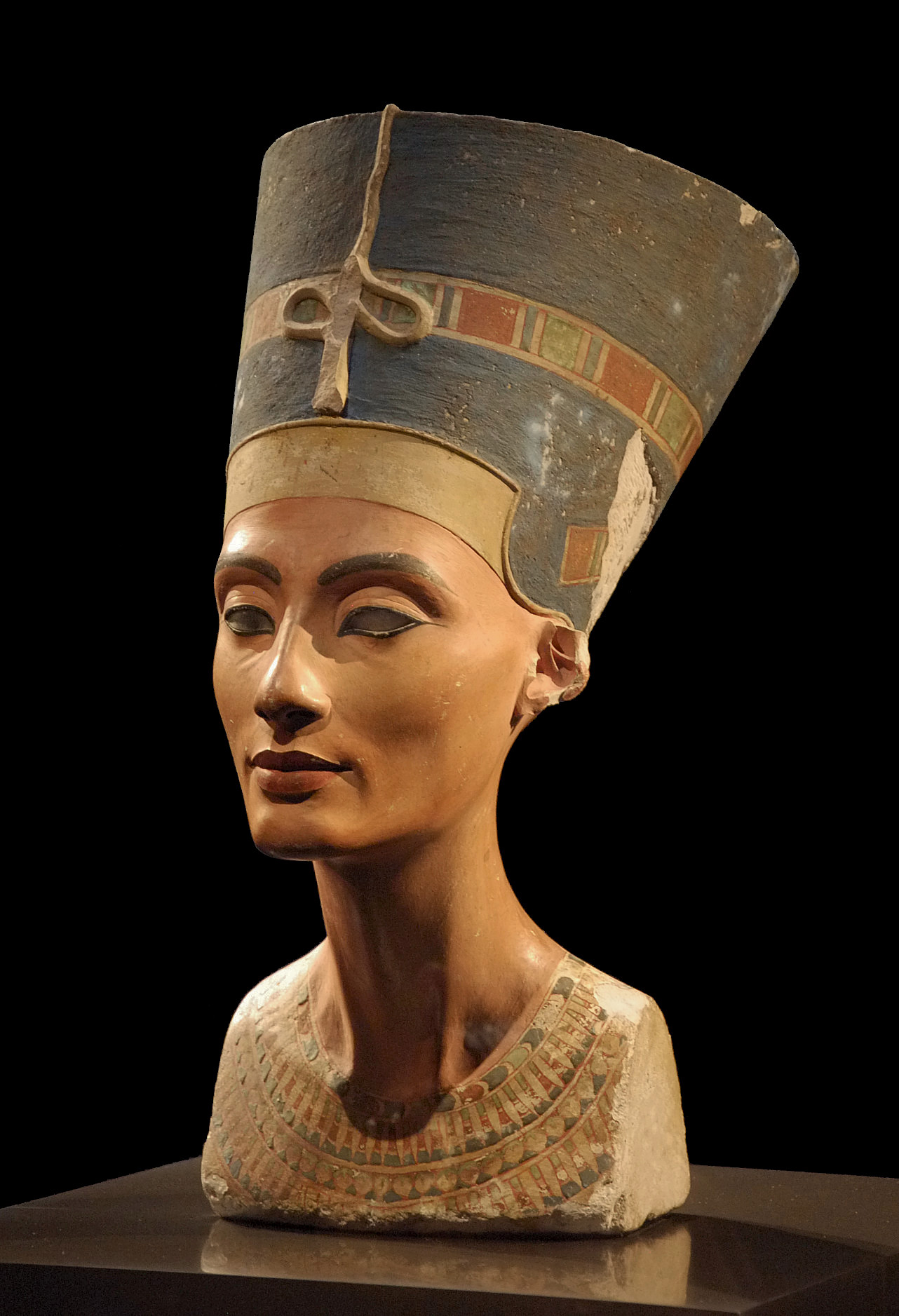
At the Neues Museum we saw the famous artifact of Berlin... the bust of Queen Nefertiti. BTW.... if I don't have a photo, I'm just snagging from the Internet. We also saw the Burial Cult Room with coffins and mummies and hierglyphics.... really old stuff from Egypt.
We then visited Ka De We, the second largest department store... second only to Harrods in London and ate lunch. Did I mention that food and drink is always a big part of the tourist mix?! And Joshua had his lunch at McDonalds!!! We continued on the bus tour and that's the next post.
 
Joshua in front of the Neuses Museum that houses Queen Nefertiti Bust. We visted the Pergamon Musuem first where the Pergamon Altar is housed.
 
 
Pergamon Altar (180-160 BC)
 
Pergamon Altar Model
 
Even more amazing is the Processional Way of Babylon with the Ishtar Gate dating from 575 BC.
 
 
 Ishtar Gate
 
Start of the Processional Way. The wall is actually twice as high. It's hard to describe how incredible this is. To be able to even create this.... I wish I had gotten video of this too.


File:Nofretete Neues Museum.jpg
Queen Nefertiti
The Nefertiti Bust is a 3,300-year-old painted limestone bust of Nefertiti, the Great Royal Wife of the Egyptian Pharaoh Akhenaten and one of the most copied works of ancient Egypt. Owing to the work, Nefertiti has become one of the most famous women of the ancient world, and an icon of feminine beauty. The work is believed to have been crafted in 1345 BC by the sculptor Thutmose.
 
Ka De We
The second largest department store next to Harod's in London
 
McDonald's - I'm loving it